Updated July 2026
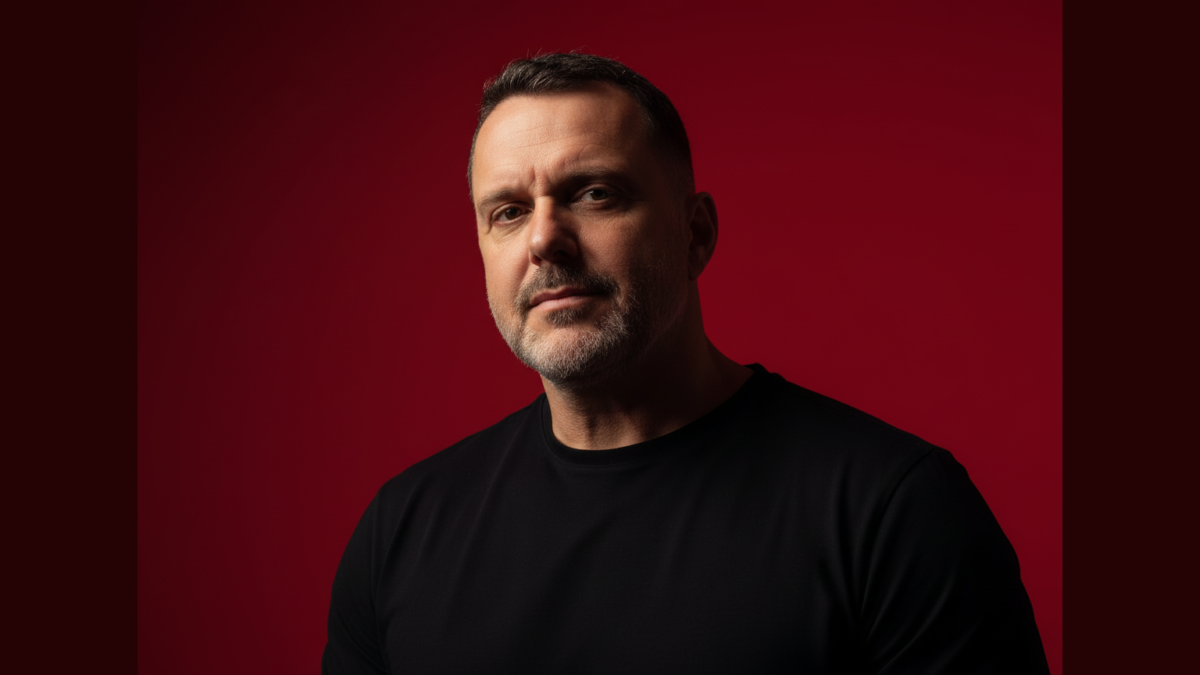
Updated July 2026. Barry Davies is not the kind of person who complains about a broken system and walks away. He is half Cypriot, half British — and after years of watching Cyprus’s professional hiring market fail the people it was supposed to serve, he decided to build the platform he wished had existed all along.
- Barry Davies is half Cypriot, half British — he built Jobs Nicosia as an insider who also knew exactly what a functional careers market should look like.
- Three things frustrated him most about Cyprus hiring: the silence after applications, the refusal to publish salaries, and the sense that candidates’ time did not matter.
- His career spanning SaaS, recruitment, fintech, iGaming, property and logistics gave him both the tools to build it and a clear view of what was broken.
- Jobs Nicosia treats salary data and hiring intelligence as editorial content worth reporting — not a database field to be auto-filled.
- The long-term vision is a connected network of city and sector publications covering Cyprus in English, Greek and Russian, built on transparency from the ground up.
Published 13 July 2026 · Barry Davies · 7 min read
Half British, Half Cypriot — and Unwilling to Accept the Status Quo
Barry Davies grew up between two cultures. His British side gave him a professional reference point: a market where job ads include salaries, where recruiters send rejection emails, where candidates are treated as people worth communicating with. His Cypriot side gave him deep roots on the island — a genuine stake in how well or badly its economy worked for the people trying to build careers within it.
The contrast, when he encountered Cyprus’s recruitment market up close, was jarring. “You could apply for a role and hear nothing — not a no, not an acknowledgement, just silence,” he recalls. “In the UK that would be considered unprofessional. In Cyprus it was normal. I kept waiting for someone to fix it.”
Nobody did. So he stopped waiting.
Barry’s background spans more than a decade building digital products across some of the most demanding industries in the economy — SaaS, fintech, iGaming, recruitment, property, logistics and marketplace businesses. He has worked with founders and leadership teams across Europe, helping companies move from concept to launch and from launch to growth. By the time he turned his attention to Cyprus’s careers market, he had an unusually clear picture of exactly what was wrong and precisely how to fix it.
What Was Broken
Barry is careful not to frame this as a cultural criticism. “It is not about Cyprus versus anywhere else,” he says. “It is about unnecessary friction that costs everyone — candidates, employers, and the wider economy — time and money they cannot get back.” But the problems were real, and in his view, they had been tolerated for too long.
Three things stood out.
1. Salaries nobody would talk about. Job advertisements in Cyprus routinely omit pay. Candidates spend hours researching roles, tailoring applications, attending interviews — sometimes multiple rounds — before discovering the salary is nowhere near what they need. Employers waste time screening applicants who would have self-selected out on day one if a number had been published. “Salary opacity does not protect anyone,” Barry says. “It just wastes everyone’s time and signals that the employer does not fully respect the candidate’s situation.”
2. A process that disrespected candidates’ time. Ghosting — applying and never hearing back — was endemic. Interviews scheduled and then postponed without notice. Feedback promised and never delivered. For professionals trying to plan a career move, the Cyprus hiring process often felt arbitrary at best and disrespectful at worst. “If you treat candidates badly during recruitment, they notice — and they tell people,” Barry notes. “Cyprus is a small island. Word travels.”
3. Platforms that listed jobs but told you nothing useful. The dominant recruitment portals were essentially digital classified ads. They answered the question “does this vacancy exist?” They did not answer: is this salary fair? Is this company a good employer? What does career progression look like in this sector? What are my chances if I apply? For a professional making a significant life decision, that information gap was the whole problem.
“The platforms were solving the wrong problem”, says Barry. “They made it easier to post a vacancy. What Cyprus actually needed was a platform that helped people understand the market — salaries, sectors, what roles actually pay, what employers actually expect. That is editorial work, not a database problem.”
Why He Decided to Build It
The decision to found Jobs Nicosia was not, Barry says, a single moment of inspiration. It was a slow accumulation of the same frustrations — observed in his own career, heard from colleagues, and made visible by his cross-sector experience — until the case for building became stronger than the case for waiting.
His years in recruitment gave him a first-hand view of how badly information asymmetry damages hiring outcomes on both sides. His time in fintech and legal and compliance hiring across Cyprus showed him that internationally focused industries operating on the island were navigating the same opacity as everyone else, but with higher stakes. A compliance officer making a career move between CySEC-regulated firms deserved real salary benchmarks, not rumour. A shipping company in Limassol hiring a maritime lawyer should not have to guess what the market rate is.
His background in SaaS and marketplace design showed him the architecture: not one generic national portal, but a network of city and sector publications, each serving a specific audience with the depth and specificity that audience actually needed. And his brand strategy experience told him how to make it credible from day one — editorial rigour, named sources, real data, content that earns trust rather than asking for it.
| Industry | What the hiring process revealed | What Jobs Nicosia does about it |
|---|---|---|
| Recruitment | Candidates routinely ghosted; salary ranges treated as confidential | Publishes verified salary ranges with named sources in every article |
| Fintech & iGaming | International-standard roles advertised with no salary and minimal job detail | Sector-specific salary guides with CySEC-registered company context |
| Property | Fast-growing sector hiring aggressively with no published norms | Category coverage of real estate hiring trends and salary benchmarks |
| SaaS / Tech | Tech talent comparing Cyprus against EU competition with no local data | Tech salary guides benchmarked against actual Cyprus listings and CyStat data |
| Logistics | Operational roles chronically underpublicised relative to market demand | Cross-sector coverage that surfaces roles and pay bands that classifieds ignore |
| Brand & marketing | Creative and marketing hires treated as afterthoughts in job ad quality | Editorial design that treats every piece of careers content as worth doing well |
Three Things Jobs Nicosia Does Differently
The platform Barry built is a direct response to the three failures he identified. Every structural decision traces back to one of them.
Salary transparency — non-negotiable. Every article that covers a role or sector publishes salary data, sourced and named. Not a vague range recycled from a pan-European report that barely distinguishes between Nicosia and Warsaw. Real figures, from real Cyprus sources — CyStat labour market releases, Ministry of Labour data, and verified employer benchmarks. “It should be the baseline, not the exception,” Barry says. “Every professional on this island deserves to know what their skills are actually worth.”
Editorial intelligence, not listings. Jobs Nicosia is not a job board. It is a careers publication. The difference matters: a job board tells you a vacancy exists. A publication tells you whether the salary is fair, whether the sector is growing or contracting, what skills employers in that field are actually prioritising, and what a candidate in Nicosia needs to know before they apply. That requires journalism, not automation.
Trilingual from the start. According to the Cyprus Department of Labour, Cyprus’s registered workforce includes a substantial proportion of non-Cypriot nationals — professionals from across the EU and beyond who work in English, Greek or Russian depending on their sector and background. Building a careers publication that only serves English speakers, or only Greek speakers, is building half a platform. Every article on Jobs Nicosia publishes in all three languages. “If you want to serve Cyprus, you have to serve the people who actually work here,” Barry says. “That means all of them.”
AI, Innovation and What Comes Next
Barry’s commitment to fixing Cyprus hiring has not stopped at editorial content. The most recent addition to the Jobs.com.cy network is TalkEmily, the AI voice recruiter built to remove the friction from the application process itself.
TalkEmily lets candidates apply for roles through natural conversation — no forms, no CV upload, no process that assumes every applicant has hours to spend on a single application. For employers, it means faster screening and better early-stage matching. For candidates, it means being heard rather than processed. “AI in recruitment is not about replacing the human conversation,” Barry says. “It is about making sure more people get to have it — especially the candidates who might otherwise fall through the cracks of a form-based system.”
The network continues to expand. Jobs Limassol is live as the second city publication. Larnaca, Pafos and dedicated sector desks in technology, finance, shipping and healthcare are the next stages. The goal for each new vertical is the same: to give the professionals who work in that city or sector the careers intelligence they have never had access to before.
For Barry, the mission has been clear from the start. Cyprus has a sophisticated, internationally connected economy. It has a talented, multilingual, ambitious workforce. What it has lacked, for too long, is the professional infrastructure those people deserve. Building that — one city, one sector, one honest article at a time — is the work.
Frequently Asked Questions
Who is Barry Davies, and why did he start Jobs Nicosia?
Barry Davies is the founder and Editor-in-Chief of Jobs Nicosia and the Jobs.com.cy careers network. He is half Cypriot, half British, with a career spanning SaaS, recruitment, fintech, iGaming, property and logistics. He founded Jobs Nicosia because he saw three persistent failures in Cyprus’s hiring market — salary opacity, candidate ghosting, and platforms that listed jobs without providing useful context — and decided to build the resource he wished had existed.
What makes Jobs Nicosia different from a standard Cyprus job board?
Jobs Nicosia is an editorial publication, not a listings board. Every article publishes salary data with named sources, provides sector-specific context, and is written to help professionals make real decisions — not just click on a vacancy. The platform also publishes in English, Greek and Russian, reflecting Cyprus’s actual multilingual workforce rather than a simplified version of it.
Does Jobs Nicosia only cover Nicosia?
Jobs Nicosia is the editorial flagship and national careers publication for Cyprus. The Jobs.com.cy network also includes Jobs Limassol, which covers Limassol’s finance, shipping, technology and hospitality sectors. Further city publications and sector desks are planned. Each network site publishes trilingual editorial content with local salary data for its specific audience.
Why is salary transparency so important to the Jobs Nicosia approach?
Salary opacity creates inefficiency on both sides of the hiring table. Candidates waste time applying for roles that don’t fit their situation. Employers screen applicants who would have self-selected out if a number had been published. Barry’s view is that publishing salaries is the baseline for a respectful, functional recruitment market — and that Cyprus professionals have been waiting long enough for it to become standard.
What is TalkEmily and how does it connect to the Jobs Nicosia mission?
TalkEmily is an AI voice recruiter built into the Jobs.com.cy platform. It lets candidates apply through natural conversation rather than forms or CV uploads, reducing the friction that causes many qualified applicants to abandon the process entirely. For Barry, it is an extension of the same founding principle: make Cyprus hiring fairer, more accessible, and more respectful of the time of everyone involved.
Related on Jobs Nicosia:
TalkEmily: The AI Voice Recruiter Built for Cyprus ·
Compliance Officer Salaries in Cyprus 2026 ·
Cyprus Job Vacancies 2026: What the Numbers Say