
Cyprus 13th salary 2026: who gets it, when it’s paid, how it’s taxed
Updated June 2026
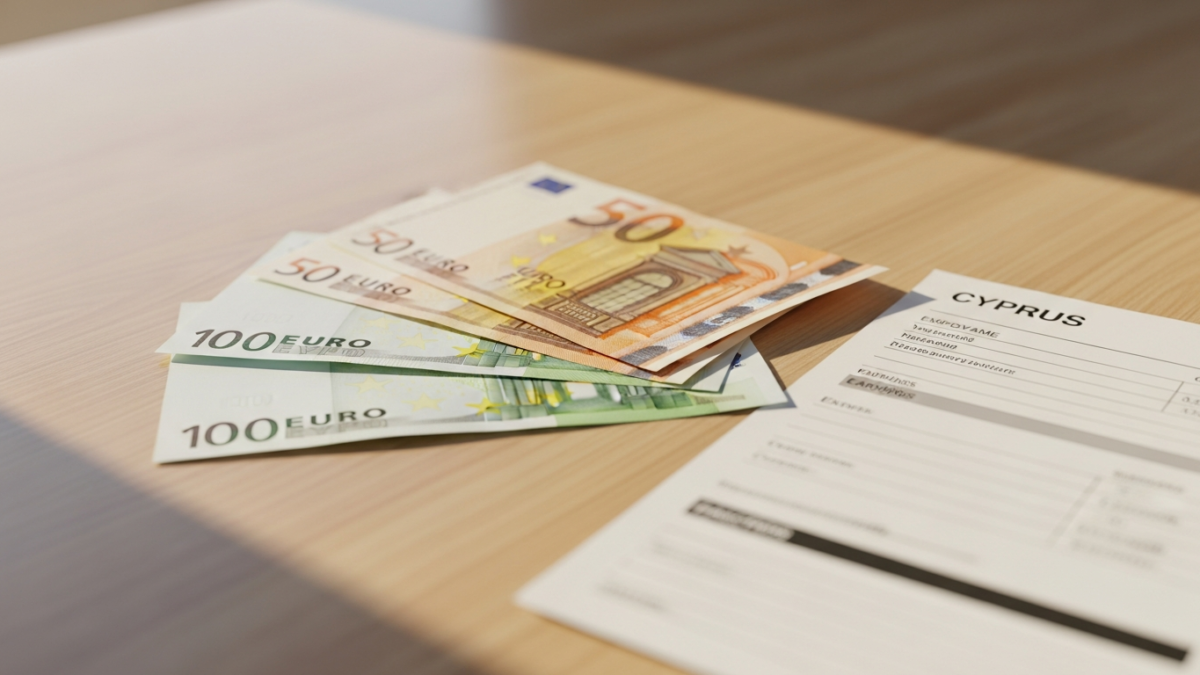
Photo: Jobs Nicosia
Updated June 2026. The Cyprus 13th salary is an extra month’s pay added to most employment contracts on the island — typically split between June and December. It is not a bonus and not a gift: where it appears in your contract or collective agreement, it is a legally enforceable wage. Below is the full 2026 picture — who gets it, exactly when, how it’s calculated, how it’s taxed, and what happens if you join or leave mid-year.
Key Takeaways
- The 13th salary in Cyprus is one extra month of base pay, normally paid in two halves — half before summer holidays (typically June) and half before Christmas (typically 15–20 December).
- It is not statutory by default — it is created by your individual employment contract, by company policy, or by a sector collective agreement (banks, hotels, retail, semi-government).
- Mid-year joiners and leavers are paid pro-rata, calculated by months actually worked in the calendar year.
- The 13th salary is fully taxable as ordinary employment income and subject to social insurance, GESY and PAYE — there is no special “bonus tax” treatment in Cyprus.
- About 72% of full-time Cyprus employees receive a 13th salary; some sectors (banking, hotels, semi-government) also pay a smaller 14th salary at Easter.
What is the 13th salary in Cyprus?
The 13th salary (Greek: δέκατος τρίτος μισθός) is one extra month of an employee’s base salary, paid annually on top of the twelve regular monthly wages. It is a legacy of the broader European tradition of seasonal pay supplements — common across Greece, Portugal, Spain, Italy, Austria and parts of Latin America — and in Cyprus has been embedded in the major collective agreements since the 1970s.
Crucially, “13th salary” in Cyprus does not refer to an annual performance bonus. It is contractual base pay, distributed across thirteen instalments rather than twelve. That distinction matters because it changes how the payment is taxed (ordinary income, no special treatment), how it accrues (pro-rata from day one of employment), and what happens if the employer simply doesn’t pay it — it is a recoverable wage debt, not a discretionary perk. For the full cross-sector pay context, see the Cyprus salary guide 2026.
Is the 13th salary mandatory in Cyprus?
No — there is no general statute in Cyprus that requires every employer to pay a 13th salary. The obligation arises from one of three sources:
- The individual employment contract. If your contract specifies a 13th salary, the payment is contractually owed.
- A registered collective agreement. Sectors with strong unions — banking (ETYK), hotels (OEX), retail (POVEK), semi-government — bind every covered employer regardless of the individual contract.
- Established custom or practice. Where an employer has paid a 13th salary consistently for years without explicit contractual reference, Cyprus labour case law has repeatedly held that the practice creates an implied contractual right.
If none of those three apply — for example, a small private employer that has never paid a 13th salary and whose contract is silent — there is no obligation. The Ministry of Labour and Social Insurance (MLSI) publishes guidance on collective agreements and their coverage by sector.
Which sectors pay it?
| Sector | 13th salary? | 14th salary? | Source of obligation |
|---|---|---|---|
| Banking (Cypriot & EU subsidiaries) | Yes — universal | Yes — Easter | ETYK collective agreement |
| Hotels (4★ and 5★) | Yes — universal | Partial | OEX collective agreement |
| Retail (large chains) | Yes — typical | No | POVEK collective agreement |
| Semi-government (CyTA, EAC, ports) | Yes | Yes | Sectoral agreement |
| Civil service | Yes | No (folded into base since 2013) | Public service law |
| Tech / fintech (Limassol) | Usually contractual | No | Individual contract |
| Construction | Often — varies | Rare | SEK / PEO collective agreements |
| Small private firms (no agreement) | Discretionary | No | Individual contract only |
The latest Cyprus Statistical Service (CyStat) earnings survey shows that approximately 72% of full-time employees in Cyprus receive a 13th salary, and roughly 11% also receive a 14th salary — almost entirely concentrated in banking and the unionised semi-government sector.
When is it paid and how is it calculated?
The standard payment pattern is half in June (before the summer-leave period) and half before Christmas (typically 15–20 December). Banks under the ETYK agreement pay the full 13th as a single lump in December. Hotels under OEX pay half in June and half in November. Many tech employers pay the full thirteenth in December as a single payment. The exact split should be specified in your contract or collective agreement; if silent, payment in two halves is the legal default.
The base figure is one month of contractual gross pay at the time of payment. For a full-year employee earning €2,500/month gross: annual base (12 months) = €30,000; 13th salary = €2,500; total annual gross = €32,500. Mid-year joiners and leavers are paid pro-rata: (monthly salary × full months worked) ÷ 12. An employee earning €2,500/month who joined on 1 April and works 9 full months is owed €1,875 in December. Pro-rata 13th owed on departure must be included in the final pay run — omitting it creates a recoverable wage debt with statutory interest.
How is the 13th salary taxed in Cyprus?
The 13th salary is fully taxable as ordinary employment income in the year it is paid. There is no special bonus rate, no flat tax, and no exemption. The full amount is added to your gross monthly pay in the month it is received and standard PAYE applies. In the month the 13th half is paid you will see: income tax at the marginal Cyprus rate (0% to €19,500; 20% to €28,000; 25% to €36,300; 30% to €60,000; 35% above); social insurance at 8.8% employee contribution (2026 ceiling €67,236); and GESY at 2.65% employee contribution. Many large employers smooth this with the monthly-accrual method — deducting one-twelfth of the annual 13th salary tax each month and reconciling at year-end, so the take-home in the bonus month looks identical to any other month.
Frequently asked questions
Is the 13th salary mandatory in Cyprus?
No — there is no general statute requiring it. It becomes mandatory when specified in your employment contract, in a sector collective agreement (banking, hotels, retail, semi-government), or where an employer has consistently paid it for years and an established practice has formed. Approximately 72% of full-time Cyprus employees receive it.
When is the 13th salary paid in Cyprus?
The standard pattern is half in June and half in December. Banks typically pay the full 13th as a single lump in December; hotels often pay half in June and half in November. The split should be specified in the contract; if silent, the legal default is two halves — June and December.
How is the 13th salary taxed in Cyprus?
As ordinary employment income — no special bonus rate. Standard tax bands apply (0% up to €19,500; 20% to €28,000; 25% to €36,300; 30% to €60,000; 35% above). Social insurance (8.8% employee) and GESY (2.65% employee) also apply. Many employers spread the tax impact using the monthly accrual method.
Do I get a 13th salary if I joined mid-year?
Yes — pro-rata. The formula is (monthly salary × full months worked in calendar year) ÷ 12. An employee earning €2,500/month who joined on 1 April has worked 9 months by year-end and is owed €1,875 in December. The same applies if you leave before year-end — the pro-rata amount is part of your final pay.
What is the difference between the 13th and 14th salary?
Both are extra months of base pay on top of the regular twelve. The 13th is paid annually (typically split June + December). The 14th — paid by banks, parts of semi-government, and some unionised private-sector employers — is a second extra month, normally split half at Easter and half in December. Both are fully taxable as employment income.
Can my employer refuse to pay the 13th salary if the company is loss-making?
No — where the 13th salary is contractual or covered by a collective agreement it is wage, not a discretionary bonus, and is not conditional on employer profitability. Non-payment creates a recoverable wage debt with statutory interest. The Department of Labour Relations is the first formal recourse; the Industrial Disputes Court handles unresolved claims within a six-year limitation period.
Browse current Cyprus vacancies with full salary and 13th-salary details disclosed at jobs.com.cy — Cyprus’s curated job platform.
Related on Jobs Nicosia: Cyprus salary guide 2026 · Cyprus minimum wage 2026 · Cyprus 50% income-tax exemption 2026.