
Updated May 2026
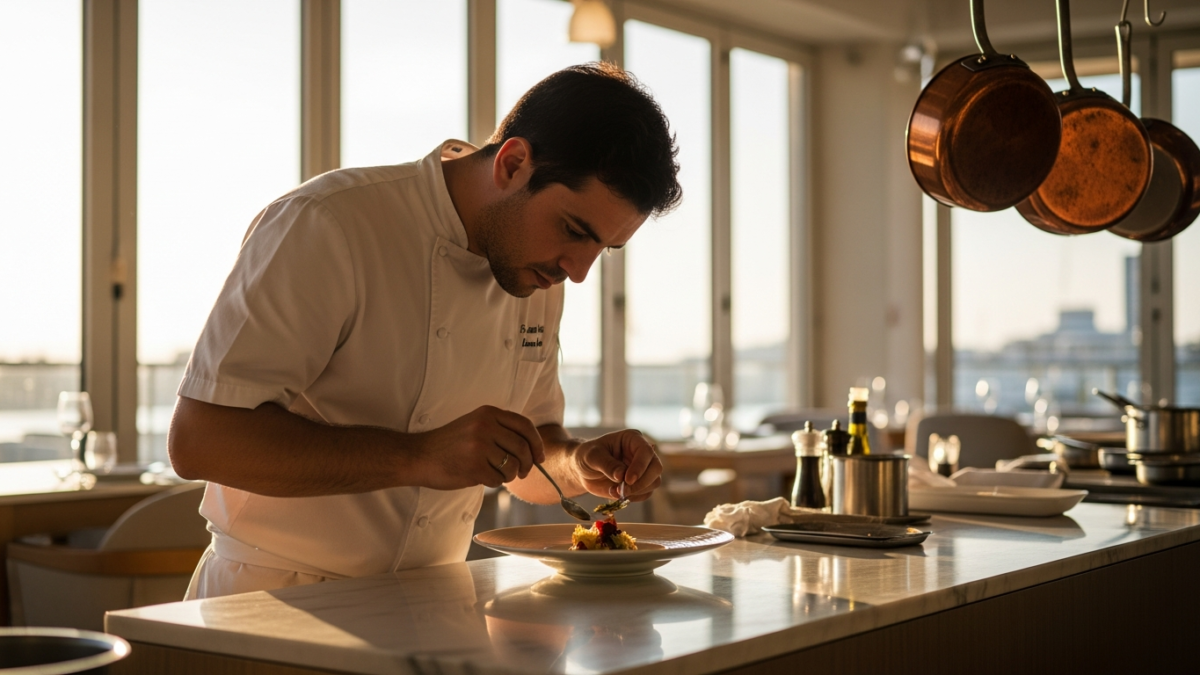
Updated May 2026. A head chef at a destination restaurant in Cyprus earns between €48,000 and €78,000 gross per year in 2026, plus a share of the service charge worth a further 8–18% of base. That puts the top end of independent restaurant kitchens in Limassol marina, Paphos harbour and Protaras old village on level pegging with mid-tier five-star hotel kitchens — and a one-Michelin-star property pushes it higher still.
Key Takeaways
- Head chefs in Cyprus restaurants earn €48,000–€78,000 gross plus tips in 2026, matching mid-tier 5-star hotel kitchens.
- A commis chef starts at €15,600–€18,500; the climb to head chef typically takes 8–12 years in the brigade.
- Tips and service-charge pools add 5–22% on top of base depending on the venue; the first €1,950/yr of tips is effectively tax-exempt under the standard personal allowance.
- Cyprus’ three current Michelin-starred kitchens — Caprice, To Anamma, Pyxida — pay a 15–25% premium over the unstarred destination average.
- Non-EU chefs need a Department of Labour work permit; the standard route is a 12-month renewable contract sponsored by the restaurant under the skilled-worker category.
How much does a head chef earn in Cyprus?
The honest answer is: it depends on whether you are running a four-star hotel kitchen, a 60-cover independent on the marina, or a Michelin-starred destination. Across the three settings the 2026 base for a head chef sits between €42,000 and €78,000 gross, with the median landing close to €54,000. Add the service-charge share (most Cyprus restaurants pool 8–12% of pre-VAT revenue and distribute roughly a third of that to the kitchen brigade) and the realistic total for a working head chef in Limassol or Paphos is closer to €58,000–€90,000. Executive chefs running multi-outlet operations — a hotel with two restaurants and a pool grill, or a small group of three independent venues — sit at €72,000–€110,000 total compensation, with accommodation or an accommodation allowance often built in. For the wider sector context, see our hospitality and tourism jobs Cyprus guide.
Full brigade salary table, 2026
Figures below are 2026 gross annual base for Cyprus restaurants (independent destination venues and four/five-star hotel kitchens combined). The tips column shows the typical additional share of pooled service charge a holder of that role takes home, expressed as a percentage of their base salary.
| Role | Base (€/yr gross) | Tips / service share | Realistic total |
|---|---|---|---|
| Commis chef | €15,600–€18,500 | +5–8% | €16,400–€20,000 |
| Demi chef de partie | €19,000–€22,500 | +7–10% | €20,500–€24,800 |
| Chef de partie | €23,000–€28,500 | +8–12% | €25,000–€32,000 |
| Sous chef | €30,000–€42,000 | +10–15% | €33,000–€48,500 |
| Head chef | €48,000–€78,000 | +12–18% | €54,000–€92,000 |
| Executive chef (multi-outlet) | €68,000–€105,000 | +8–22% | €74,000–€128,000 |
All figures include the statutory 13th-month payment. Bonus is excluded — most Cyprus restaurants do not pay a structured year-end bonus to kitchen staff, although Michelin-starred and luxury-hotel venues now pay a discretionary 4–8% on attainment of cost and quality KPIs. By comparison, a hotel-side five-star hotel manager in Cyprus sits at €65,000–€110,000, which is why senior chefs frequently lateral into F&B director seats by their mid-forties.
Insider note — the Michelin one-star bump. Cyprus currently holds three Michelin stars: Caprice at the Anassa hotel in the Akamas, To Anamma in Limassol, and Pyxida in Nicosia. The base pay for a head chef at a Cypriot one-star kitchen runs €68,000–€95,000 — a 15–25% premium over an unstarred destination restaurant of the same cover count. Stagiaire and chef de partie seats at the three properties are oversubscribed; CVs are typically held on file for 6–9 months before a callback. The starred premium does not reach commis level: entry-grade pay is identical to a four-star hotel kitchen.
Tips, service charge and how they really work
Cypriot restaurants typically add an optional service charge of 10% to the bill (mandatory at some hotel restaurants, discretionary at most independents). The pool is split front-of-house vs back-of-house, usually 60/40 or 65/35 in favour of the floor, then distributed within each side by seniority points. Cash tips left over and above the service charge belong to the individual receiving them. For tax purposes, all tip income is technically declarable as employment income, but the standard personal allowance of €19,500 covers the bulk of commis- and demi-level total compensation, and the practical effect is that low-grade tips go untaxed. Senior brigade tips push earnings well above the threshold and are taxed at the marginal rate.
Accommodation, hours and the rest of the package
Accommodation is a serious lever in this market. Resort kitchens in Paphos, Protaras and the Akamas routinely provide on-site staff housing or a €350–€650/month rent allowance for sous chef level and above; in Limassol, where rents have moved hard since 2022, an allowance is more common than physical accommodation. Five-day weeks with a split shift remain the norm in independents during high season; hotel kitchens have largely moved to a 40-hour straight-shift rota with the second day off floating. The standard pension, GESY (national health) contributions and 21 days’ paid leave apply across the board.
The career path: commis to head chef, year by year
The realistic Cyprus timeline from a culinary-school exit to running a kitchen is 8–12 years. Years 1–2 as commis cover the four major sections (sauce, fish, larder, pastry) at a hotel or busy independent. Years 3–5 promote into chef de partie, owning a section through a full season. Years 5–7 step up to sous chef, which is where the workload, accountability and pay all jump materially. The head-chef seat opens between years 8 and 12 depending on luck, mobility and the willingness to relocate between Limassol, Paphos and Ayia Napa. A two-year stage abroad — typically in London, Athens or Dubai — accelerates the climb by roughly two years and adds a €6,000–€12,000 premium on return. For non-EU chefs joining the Cyprus market mid-career, see our non-EU seasonal worker guide for the permit mechanics.
Frequently asked questions
Are tips taxed in Cyprus restaurants?
Yes, in principle. All tip income — whether pooled service charge or individual cash tips — counts as employment income under the Cyprus Income Tax Law and should be declared. In practice, the €19,500 standard personal allowance shelters most commis and demi pay; tips for senior brigade staff push total earnings above the threshold and are taxed at the marginal rate (20%, 25%, 30% or 35%). Restaurants pooling service charges typically run them through payroll so tax is handled at source.
Do Cyprus restaurants give chefs accommodation?
At resort properties in Paphos, Protaras and the Akamas, on-site staff accommodation or a rent allowance of €350–€650 per month is standard for sous-chef level and above. In Limassol it is more often a cash allowance than a physical room. Hotel chains nearly always include accommodation or an allowance in the offer for head chef and executive chef seats; independent restaurants vary widely.
How does the foreign-chef work permit route work in Cyprus?
Non-EU chefs need a work permit issued by the Department of Labour at the Cyprus Ministry of Labour and Social Insurance. The standard route is a 12-month renewable contract sponsored by the employing restaurant under the skilled-worker category, with a published minimum salary threshold and proof that no suitable EU candidate applied within the labour-market test period. For seasonal kitchen roles within the hospitality quota, applications open 1 February each year and most contracts are confirmed by mid-March.
Do I need French culinary qualifications to work in a Cyprus kitchen?
No. The Cypriot industry uses the French brigade terminology (commis, chef de partie, sous, etc.) but does not require a Le Cordon Bleu or Ferrandi qualification. A Cyprus or EU culinary diploma — CTU, Higher Hotel Institute Cyprus, Intercollege, or an equivalent — plus genuine section experience is what hiring chefs screen for. A French qualification is a CV plus for fine-dining and Michelin-starred kitchens, but craft and references win the seat.
How long does it take to go from commis to head chef in Cyprus?
The realistic Cyprus timeline is 8–12 years: 2 years as commis, 2–3 as demi, 2–3 as chef de partie, 2 as sous chef, then the step up. Roughly 60% of working head chefs in Cyprus take a 12–24 month stage outside the island (London, Athens, Dubai or France) at some point in years 3–6 — those who do typically reach the head-chef seat 18–24 months earlier than those who stay local throughout.
Looking for live chef and kitchen-brigade roles? Browse current commis, chef de partie, sous chef and head chef openings across Limassol, Paphos and Nicosia on jobs.com.cy, our partner jobs board.
Related on Jobs Nicosia: Hospitality & tourism jobs Cyprus 2026 · Hotel manager salaries Cyprus 2026 · Working a season in Cyprus (non-EU guide).