
Education and teaching jobs in Cyprus 2026: the complete career map
Updated June 2026
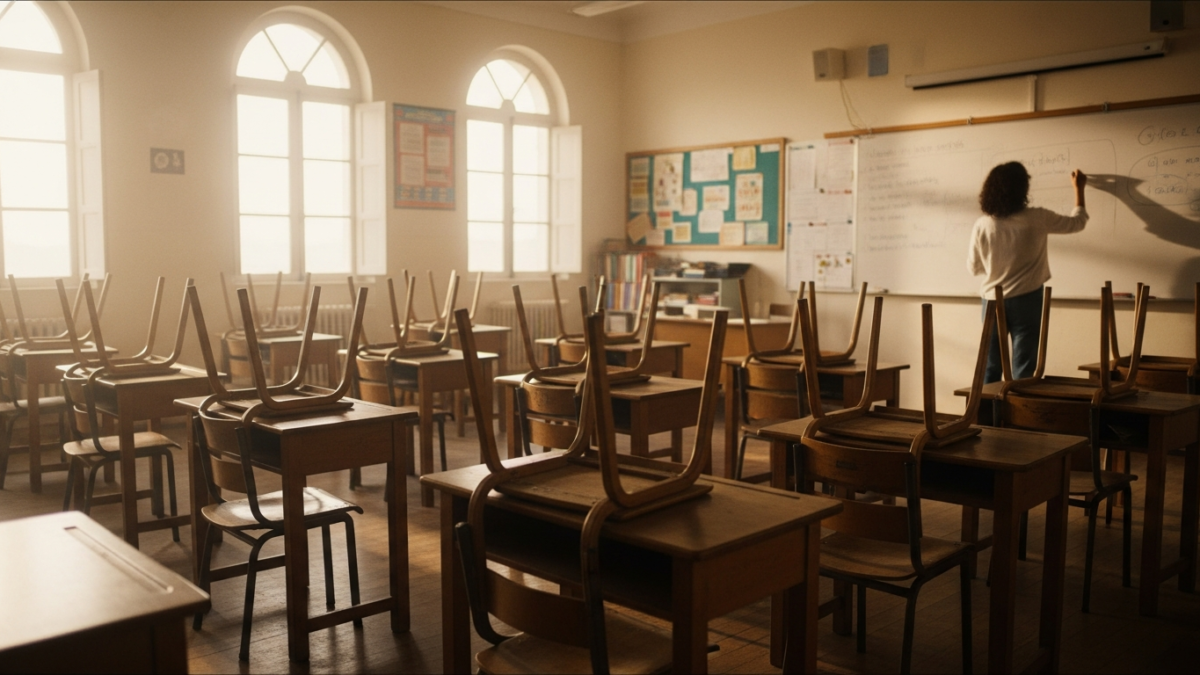
Photo: Jobs Nicosia
Updated June 2026. There are three distinct routes into teaching in Cyprus in 2026, and the path you choose at the start of your career largely determines your pay trajectory for the next two decades. The public MOEC track — a civil-service career governed by the Ministry of Education, Culture, Sport and Youth — offers exceptional long-term security and a statutory salary scale that reaches €3,000–€4,000/month at the top of the A11 grade, but requires passing competitive entry examinations and accepting a 22-year ladder to reach that ceiling. The private and international school track pays comparably for experienced teachers and better for senior roles, but without the lifetime employment security and pension of the state. The tutoring and EdTech track is the fastest route to above-average earnings for strong subject specialists, but with no job security whatsoever. This guide maps all three and the pay data for 2026.
Key Takeaways
- Public school teachers in Cyprus are employed by the Ministry of Education, Culture, Sport and Youth (MOEC) on a civil-service salary scale running from A8 (entry) through A10 to A11, with automatic annual increments and approximately 22 years to reach the top of A11.
- Entry pay at Grade A8 is approximately €1,200–€1,800/month gross — below the national cross-sector average of €2,509/month (CyStat Q1 2025) — but the long-term scale rewards tenure with above-average pay at A11.
- All new public school teachers serve a 2-year probation period before permanent appointment; both primary and secondary new entrants are affected.
- International and private English-language school demand is growing rapidly, driven by the relocation of expat families following Cyprus’s 50% income tax exemption and digital nomad visa schemes.
- Limassol, Nicosia, and Paphos host the largest concentrations of international school vacancies; QTS, PGCE, or IB Diploma Programme certification significantly expands the eligible employer base.
The three teaching tracks: a structural comparison
| Track | Entry pay (gross/month) | Senior / top pay | Job security | Progression speed |
|---|---|---|---|---|
| Public school (MOEC) — A8 | €1,200–€1,800 | €3,000–€4,000 (top A11) | Lifetime (after probation) | Slow — 22 yrs to top |
| Private Cypriot school | €1,100–€1,700 | €2,000–€3,000 (senior) | Contract-based | Moderate |
| International / English-language school | €1,500–€2,500 | €2,800–€4,500 (HOD/VP) | Contract-based | Faster for experienced |
| Private tutoring (self-employed) | €15–€35/hour | €40,000–€70,000/yr (full book) | None | Demand-driven |
Sources: MOEC salary scales (moec.gov.cy); Glassdoor Cyprus teaching 2025–2026; national benchmark: €2,509/month gross (CyStat Q1 2025, cystat.gov.cy).
The MOEC public track: entry, probation, and the scale
Public school teaching in Cyprus is administered by the Ministry of Education, Culture, Sport and Youth (MOEC, moec.gov.cy), which manages both primary (MOEC Directorate of Primary Education) and secondary (Directorate of Secondary Education) school systems. Entry to the permanent public teaching service requires passing competitive recruitment examinations administered by the Public Service Commission — not directly by MOEC. These examinations are held periodically and are highly competitive; the pass-and-appointment process can span 2–4 years from application to permanent contract. New entrants spend their first 2 years on probation before permanent appointment is confirmed. During probation, salary is paid at the A8 scale. Candidates who do not pass the PSC examination, but who hold recognised teaching qualifications, can obtain temporary or substitute teaching positions within the MOEC system (on lower pay and without permanency), which can build experience toward the next PSC examination round. For teachers who hold UK QTS or PGCE and are interested in the international school route while waiting for PSC exam cycles, the international school jobs guide covers the practical alternatives.
International school demand: the expat-driven boom
The fastest-growing segment of the Cypriot teaching market in 2026 is the international and English-language private school sector, driven directly by the growth of the island’s expat and relocating-HNW population. Families relocating to Cyprus under the 50% income tax exemption scheme or the digital nomad visa bring school-age children who require an English-language or international curriculum education — an education that the Cypriot public system, which operates in Greek, cannot provide. The response has been a proliferation of new English-medium schools, expansions of existing international schools (particularly in Limassol and Nicosia), and increased hiring of English-speaking qualified teachers. Schools operating IB (International Baccalaureate), Cambridge IGCSE, or British National Curriculum frameworks are advertising for teachers of all subjects — but particularly maths, sciences, and English Literature — at salaries of €1,500–€2,500/month for classroom teachers and €2,800–€4,500/month for heads of department and deputy heads. Full salary and qualification detail is in the teacher salaries Cyprus 2026 guide.
Frequently Asked Questions
What is the starting salary for a public school teacher in Cyprus?
Entry Grade A8 pays approximately €1,200–€1,800 gross per month — below the national cross-sector average of €2,509/month (CyStat Q1 2025). Automatic annual increments progress the salary through A10 to A11 over approximately 22 years.
How long does it take to reach the top of the MOEC pay scale?
Approximately 22 years from entry at A8 to the top of A11, via automatic annual increments. There is no competitive promotion required — progression is time-based and guaranteed, with confirmation of permanent status after the 2-year probation period.
Is MOEC public school teaching in Cyprus competitive to enter?
Yes — highly. Entry to the permanent public teaching service requires passing the Public Service Commission (PSC) competitive examination, which is held periodically and oversubscribed. The process from application to permanent appointment can take 2–4 years.
Are international school teaching jobs growing in Cyprus?
Yes — significantly. The growth of the expat and HNW relocating population since 2022 has driven demand for English-medium and international curriculum schools, particularly in Limassol, Nicosia, and Paphos. Schools are actively hiring QTS/PGCE/IB-qualified teachers across all subjects.
What qualifications do international schools in Cyprus look for?
QTS (Qualified Teacher Status, UK), PGCE (Postgraduate Certificate in Education), or IB Diploma Programme certification are the most recognised qualifications. Cambridge International and British National Curriculum experience are valued alongside formal qualifications. Full detail in the international school jobs guide.
Browse live teaching and education vacancies across Cyprus on jobs.com.cy, our partner jobs board.
Related on Jobs Nicosia: Teacher salaries Cyprus 2026 · International school jobs Cyprus 2026 · Cyprus salary guide 2026.